

By Harrison Borthwick
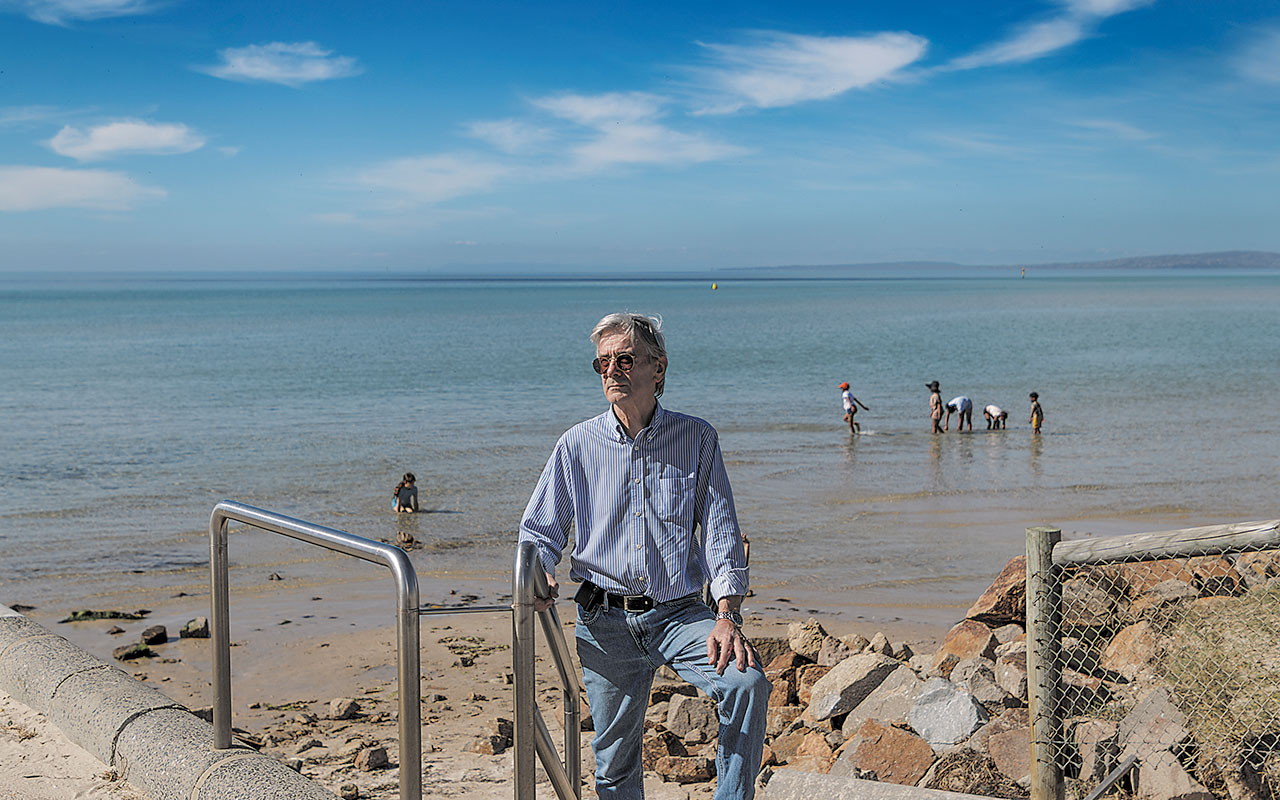
HEAD of environmental group Save Port Phillip Bay and Mornington Peninsula resident Marteen Koster is leading the fight to keep VOPAK’s regasification plant out of Port Phillip Bay.
VOPAK, a Dutch multinational company and energy and gas tank storage provider is proposing to build and operate a regasification plant/floating liquefied natural gas (LNG) port in Port Phillip Bay 20 kilometres offshore from Avalon.
According to the Victorian Department of Transport and Planning, VOPAK’s proposal will include; offshore floating storage regasification vessel, a subsea high pressure gas pipeline, two 20-kilometre long high voltage cables that connect offshore and onshore facilities, onshore facilities such as a gas receiving station and onshore underground transmission lines.
Koster who specialises in environmental law has concerns over the effects the regasification plant proposed by VOPAK will have on the biodiversity of the bay and the bay’s health for future generations.
“Unfortunately, Port Phillip Bay is under threat from toxic discharges that pose a serious risk to its ecosystem,” said Koster.
“The bay is not just a body of water, it’s part of life for very many of the five million Melburnians who live, work and play near its shores.”
VOPAK’s regasification plant will use sea water to warm the LNG to turn it back into natural gas for Victoria, and in doing so, according to Koster, the plant will pump 480 million litres of chlorinated discharge into the bay every day for ten years.
VOPAK’s proposal to set up in Port Phillip Bay reportedly commenced in 2019. In 2024 they were ordered by the Victorian government to provide an Environment Impact Statement (EES) before they could proceed and later submitted a 7000-page document.
“VOKAP’s report states that despite that the acknowledged possibilities of serious damage to the marine ecosystem and its inhabitants, ‘the effects of this massive discharge is very low’, when in reality that is not true,” Koster said.
The public were reportedly given thirty days to respond to the document.
Koster has submitted his own twenty-four-page document to the IAC outlining his concerns, including what is means for the Mornington Peninsula.
Koster’s main concerns included; the toxic chemical discharge into the bay, the cumulative pollution and the risk of damaging the bay’s ecosystem, and its consequences for the bay’s occupiers with its recreational activity, water quality, fishing and seafood.
In line with his concerns, Koster has created a petition for people with similar views regarding VOPAK’s proposal. The petition currently has 8,630 signatures.
The Times has contacted the Victorian government and Minister for Planning Sonya Kilkenny for comment regarding the process of VOPAK’s EES, but are yet to hear back.
Koster has also reached out to Nepean MP Anthony Marsh and Mornington MP Chris Crewther to contact Kilkenny but both received minimal communication back.
Ultimely Koster’s main concern is the bay’s overall health.
“I want a bay that future generations can enjoy; our children and grandchildren,” said Koster.
“The bay is important to Melburnian’s way of life. There is an important fishing industry, swimming, sailing, beach going and scuba diving. We want to keep enjoying it but it’s being treated as an industrial sewer.”
For more information regarding Save Port Phillip Bay’s campaign to keep VOPAK out of the bay, search ‘Save Port Phillip Bay from toxic discharges’ on change.org.
First published in the Frankston Times – 6 October 2026