

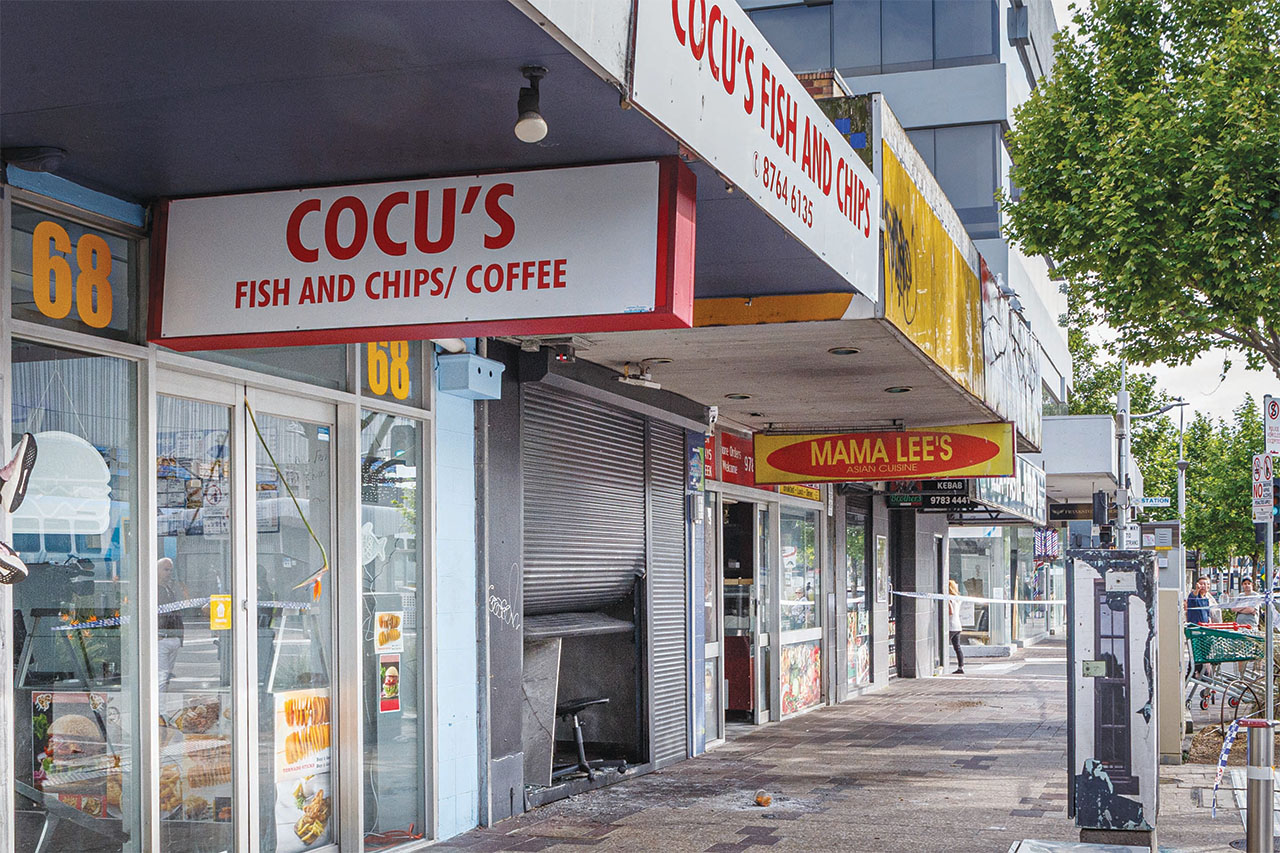
OWNERS of vacant retail spaces in Frankston’s CBD could soon face big rate increases.
Frankston Council has proposed a new differential rate for property owners of vacant retail space. Earlier this year it implemented a differential rate on owners of vacant lots within the Frankston Metropolitan Activity Centre and along Nepean Highway.
The proposal was tentatively approved at council’s meeting last week, with community consultation the next step to get underway. Former Frankston mayor Kris Bolam said that change is designed to reduce the vacancy rate of Frankston buildings.
“Our vacant FMAC and Nepean Highway land rate introduced this year has already helped shift underused land back into development and productive use. Property owners are recognising that staying idle is no longer cost-free,” Cr Bolam said. “Land speculation and land banking in these corridors, particularly along Nepean Highway, have prevented the delivery of much-needed infrastructure such as hotels, mixed-use development and new housing options. This is investment our community desperately needs, and leaving prime land inactive helps no one.”
For the proposed new differential rate, land will be considered “vacant retail land” if it is designed for retail or general business use, has not traded for at least 90 days within the past two years, and has no active building or planning permits for redevelopment. The proposed differential rate is set at 300 percent of the general rate.
The outgoing mayor said that because of the differential rate currently applied to vacant land in the most recent budget, average rate revenue from commercial ratepayers only increased by around 1.12 percent and average rate revenue from residential ratepayers increased by 2.24 percent. Both figures are comfortably under the state government’s 3 percent rate cap.
“This new proposal aims to apply the same principle to long-term vacant shops, to ensure our city centre remains vibrant, active and appealing to residents and investors alike. Long-standing vacancies hurt not just building owners, but our entire community,” Cr Bolam said. “Empty shopfronts discourage new tenants, reduce street-level activity and impact safety, amenity, and confidence in our city centre. The success of our existing differential rate gives us confidence that applying the same approach to vacant retail properties will help unlock more development opportunities.”
Council conducted a retail vacancy audit in May; it identified 79 vacant shops across the Frankston municipality with a 19 percent vacancy rate. The vacancy rate in Young Street sat above the regional average.
Community consultation on the proposed changes is expected to commence in February at engage.frankston.vic.gov.au.
First published in the Frankston Times – 16 December 2025