

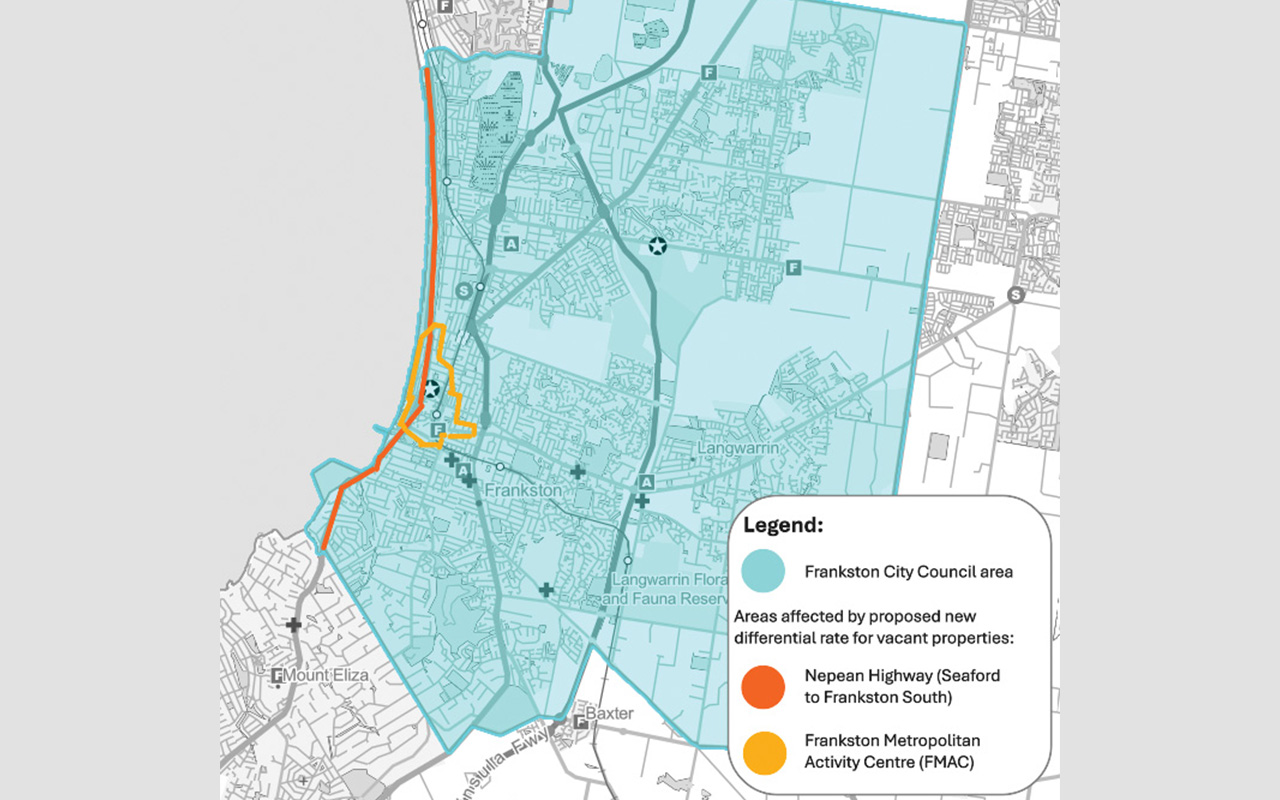
A PROPOSAL to implement a differential rate on vacant retail buildings in Frankston’s city centre is set for further consideration.
The differential rate, which is planned to be set at 300 percent of general Frankston Council rates, was proposed last year. Community consultation is underway, with submissions set to close on 4 March.
Frankston Council’s website states that the differential rate would apply to 96 vacant retail properties inside Frankston’s metropolitan activity centre. The new rate would apply if the site has a building, is designed or adapted for the sole purposes of retail or general business occupation, and has not been open to the public for retail trade for at least 90 days in the last 24 months.
The plan has drawn the ire of the real estate industry – Nichols Crowder director Michael Crowder has written to Frankston Council stating that the economic revitalisation of the area “cannot be accelerated through punitive financial measures, particularly ones that those least able to afford it would bear.”
“Every commercial property owner currently experiencing vacancy is already under significant financial strain. Vacancies are not the result of neglect or disinterest, but of prolonged structural and economic challenges within the Frankston Activity Centre,” he said. “Owners continue to meet unavoidable costs including council rates, the emergency services levy, land tax, insurance and ongoing maintenance, all while actively attempting to secure tenants in a market characterised by high supply and exceptionally low demand. An additional punitive charge would only compound hardship rather than resolve the underlying issues.
“Over recent years, council has allocated large sums of funds through business grants and shopfront activation programs designed specifically to incentivise prospective tenants. The proposed introduction of a 300 percent differential rate places the financial burden of that same market failure almost entirely on property owners. In effect, council would be subsidising tenants with public funds while simultaneously penalising landlords for circumstances that council itself recognises require incentive-based intervention.
“Vacancy is not a choice made by owners; it is a direct consequence of economic conditions, planning decisions and competitive forces that lie largely outside their control.”
Frankston Council estimates the average increase to each impacted vacant commercial ratepayer at around $1700 each year. To view the proposal or make a submission visit engage.frankston.vic.gov.au/revenue-and-rating-plan-2026-2029
First published in the Frankston Times – 24 February 2026