

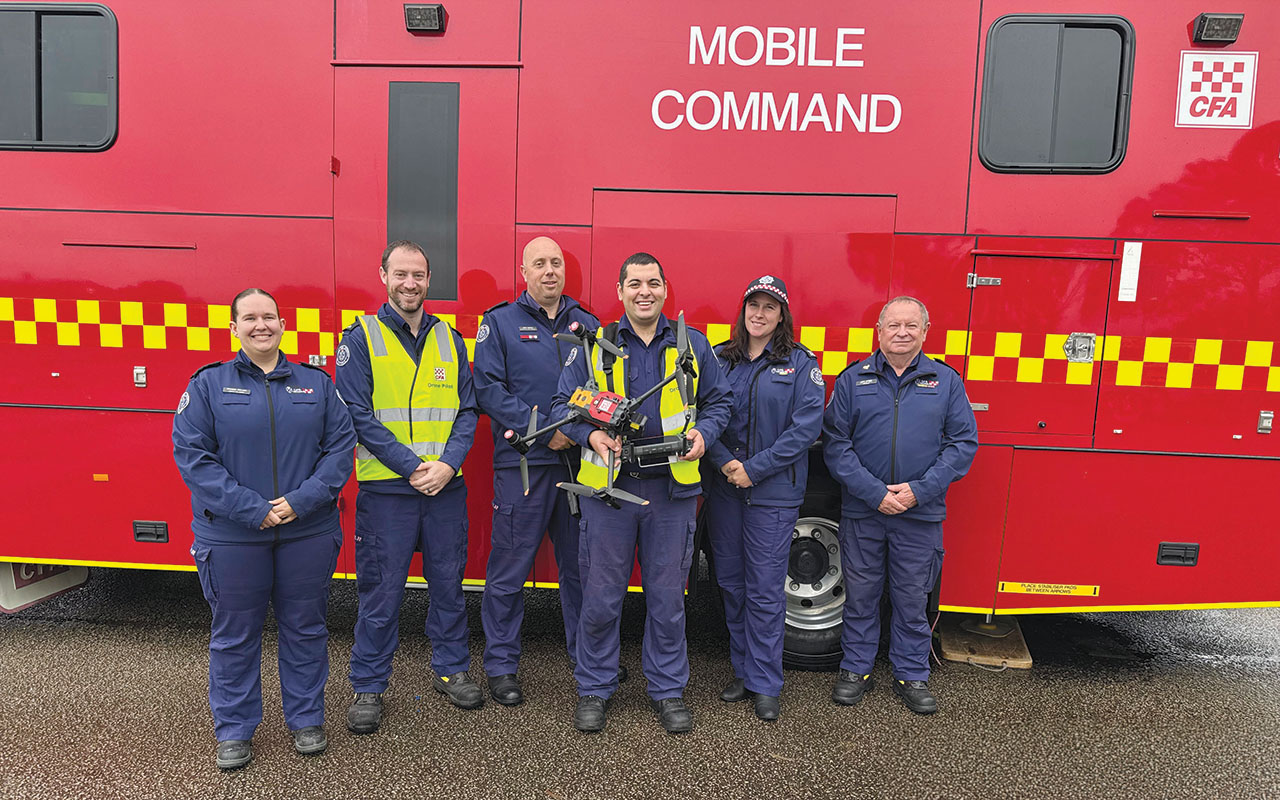
EDITHVALE CFA has been using drones to bolster its firefighting intelligence for the last year, with the pilot program being hailed a success.
Edithvale and Rowville fire brigades hosted the 12-month Remote Piloted Aircraft Systems (RPAS) trial. During that time, drones were used for identifying hot spots, hazmats, rope rescue and urban search and rescue, aerial thermal imaging, impact assessment, fire investigation, searches, and training.
The drones were used to help battle a blaze in Phillip Island in January. Incident controller Damien O’Connor that the discovery of several hot spots outside of the main fire “prevented the fire restarting in unburnt land and gave us the confidence to leave the fireground knowing our suppression techniques were successful.
“These hot spots were identified at night, and we were able to guide crews to their location through the use of the drone spotlight as well as by radio communications watching the image on the screen. I have no doubt the use of the RPAS program at this incident not only saved the local brigades many hours and potential outbreaks, it also ensured the conservation of the Koala program and its continual success to limit the spread of the fire.”
CFA commander and manager of aviation John Katakouzinos said he hopes to roll out further drones in the future. “We’re got 21 highly trained drone pilots at the moment who have been responding to a range of incidents across the state, particularly over summer,” he said.
“The varying capabilities such as still images, 4K video, HD video, optical zoom and thermal imaging provide invaluable insights to our incident controllers and firefighters. The RPAS program is a remarkable asset to CFA now and into the future.”
First published in the Chelsea Mordialloc Mentone News – 10 June 2026