

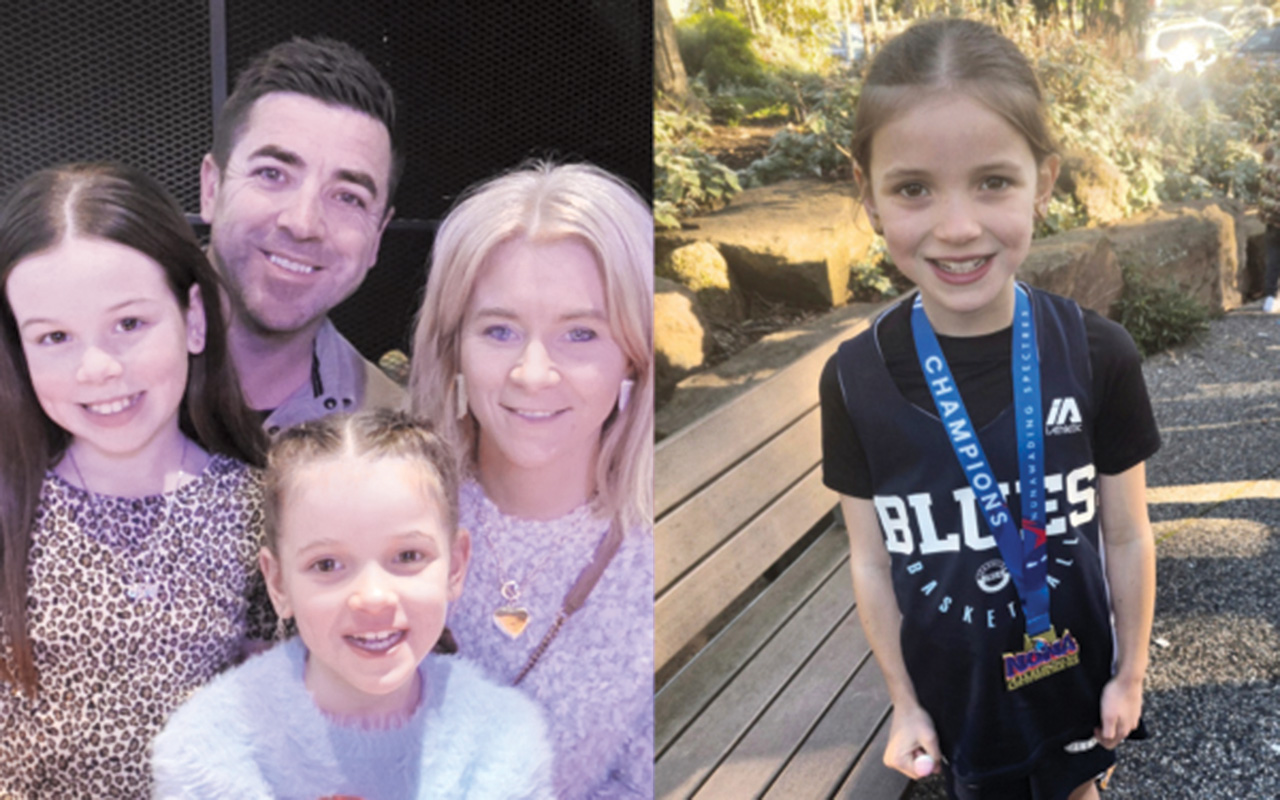
A PATTERSON Lakes family’s holiday on Phillip Island turned into a medical emergency when nine-year-old Alyssa suffered a serious asthma episode, requiring a co-ordinated and sustained response to save her.
Treatment from teams at Cowes Urgent Care Centre and Peninsula University Hospital in Frankston worked together to ensure she made a full recovery.
“Alyssa had woken up during the night with a bit of asthma, so I started her asthma management plan,” said Alyssa’s mum, Kirra.
“She had a little cold and her asthma is very much viral induced, so it wasn’t anything that seemed particularly concerning. But then after lunch it really took hold and I thought, ‘This is getting a bit out of hand.’”
Kirra took Alyssa to Phillip Island Community Hospital, where staff quickly identified that her oxygen levels were low and began treatment.
“They started the therapies they normally do, but she just wasn’t improving, which was unusual for her,” said Kirra.
“The staff were excellent and organised a PIPER (Victorian Paediatric Infant Perinatal Emergency Retrieval) transport to Frankston.”
When Alyssa arrived at Peninsula University Hospital’s Emergency Department in Frankston, she was taken straight to the resuscitation area.
A large team of clinicians worked to determine why the usually healthy young girl was failing to improve.
“She had chest X-rays, blood tests, swabs and an ECG – everything was coming back negative,” said Kirra.
“One of the doctors actually said, ‘She’s baffling us,’ because she just wasn’t improving.”
Throughout the experience, one nurse in particular left a lasting impression on the family.
Nurse Leah remained by Alyssa’s side throughout the night, helping keep both mother and daughter calm through the various treatments.
“She just had a way of making everything seem seamless,” said Kirra.
“Even when I could tell things were getting serious, she would calmly explain what was happening and what they were going to do next.”
When standard treatments failed to bring significant improvement, Leah sat down beside Kirra to explain a new approach using high-flow oxygen therapy and magnesium treatment.
“She knelt down in front of me and said, ‘We’re going to try something different now,’” said Kirra.
“I think that was probably the moment I started to realise just how serious things were.”
After this treatment, Alyssa began to improve.
“The staff even said, ‘Oh my God, she’s like a different kid,’” said Kirra.
“She just turned around out of nowhere.”
After being stabilised in the Emergency Department, Alyssa spent a few days recovering on the paediatric ward before being discharged home.
Now, the energetic nine-year-old is doing well and is back at school and on the basketball court.
Just days after leaving hospital, Alyssa was able to briefly join her basketball team during a grand final match.
“The team put her on the court with about a minute to go so she could be part of it,” said Kirra.
“The ball somehow landed in her lap and she scored three points in that minute.”
The team went on to win the grand final.
Looking back on the experience, Kirra is deeply grateful to the healthcare workers who cared for her daughter, from the clinicians in Phillip Island who recognised the need for urgent escalation to the Emergency Department and Children’s Ward staff at Peninsula University Hospital.
“For them, it’s their job,” said Kirra.
“But for parents going through something like that, scared and not knowing what’s happening, they make such a difference.
“Not just on the medical side, but in the way they care for people. They really do deserve to be acknowledged and thanked for the difference they make every day.”
First published in the Frankston Times – 11 August 2026