

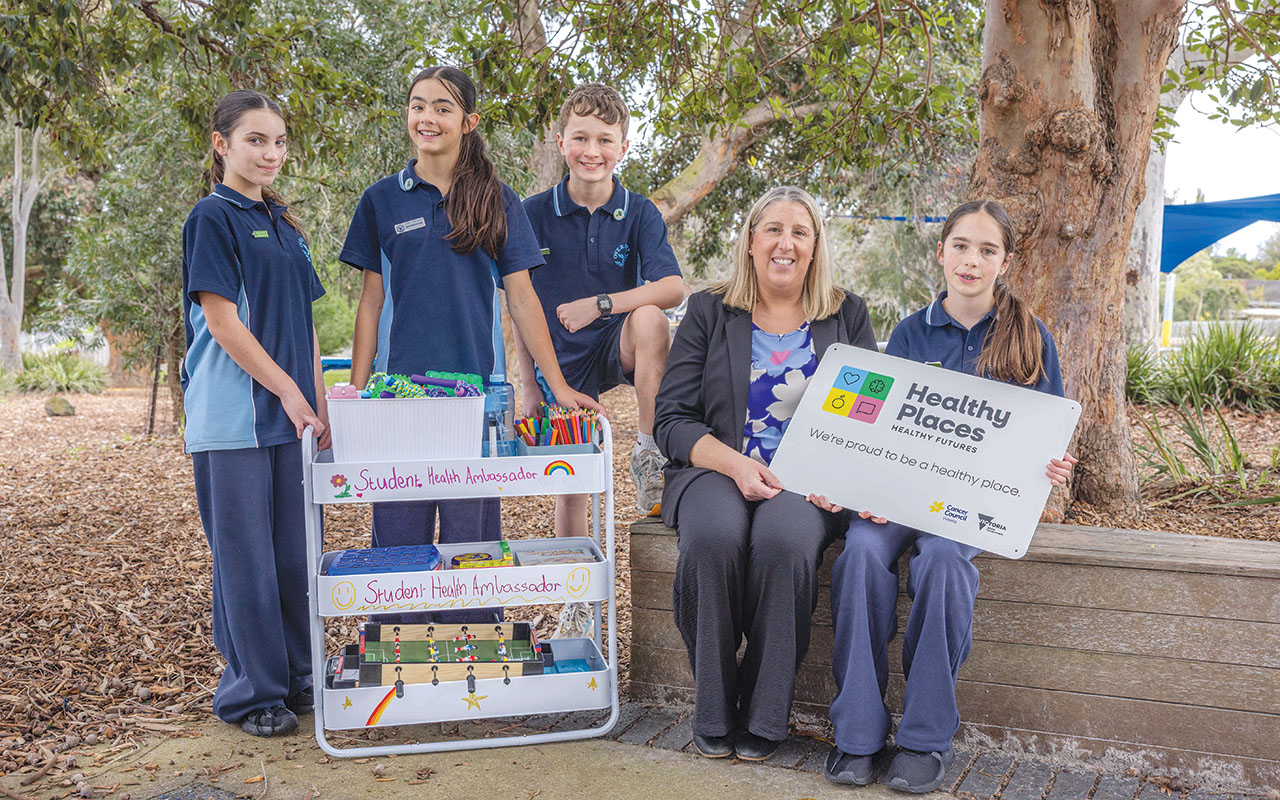
FRANKSTON’S Overport Primary School is one of more than 2,500 Victorian schools and early childhood services using Healthy Places Healthy Futures (formerly the Achievement Program), the state’s refreshed and relaunched initiative to embed health and wellbeing into everyday school life, with the local school held up as one of its strongest examples.
At Overport, which has around 700 students, Assistant Principal Jill Wathen said the biggest driver of change had been the school’s Student Health Ambassador program, established when the school joined the initiative seven years ago.
The program gives a group of Year 6 students a leadership role in shaping the school’s approach to wellbeing.
“It’s helped us move beyond adults deciding what students need, and instead it’s empowering our students to lead the change themselves,” Wathen said.
One initiative created by the group is the Friendship Factory, a lunchtime program where health ambassadors wheel out a trolley of games and help students across all year levels build connections.
“It’s such a lovely thing to see, and that came from them, from that leadership group,” Wathen said.
The student ambassadors also lead other wellbeing events, including Harmony Day, R U OK? Day and Bullying No Way Day.
Wathen said the school had recorded measurable improvements since embedding the framework.
“We’ve increased student participation in our wellbeing initiatives, and obviously the leadership opportunities for the children,” she said. “Students report stronger feelings of inclusion and belonging through those initiatives.
“We’ve seen increased student ownership of wellbeing across the school community, and from a leadership perspective, we’ve achieved stronger consistency across policies and practices.”
The school is supported locally by health promoter Kristen Young from Bayside Health – Peninsula Care Group.
“She’s been here right from the start, so seven years ago when we started our journey,” Wathen said.
“Her support is just integral. She helps us to turn our ideas into action and work through the framework, and having access to local expertise and ongoing guidance has been incredibly valuable for our leadership team and school community.”
More than half of the schools and services registered with Healthy Places – 54 per cent – are located in Victoria’s most disadvantaged communities.
Wathen said the framework had brought the school’s community together around a shared goal.
“Healthy Places recognises the work we already have in place.
“It’s helped to align our leadership team, our students and our community to make sure we’re all on the same page and working towards the same goal, which is to promote health and wellbeing across our school.”
First published in the Frankston Times – 21 July 2026
