

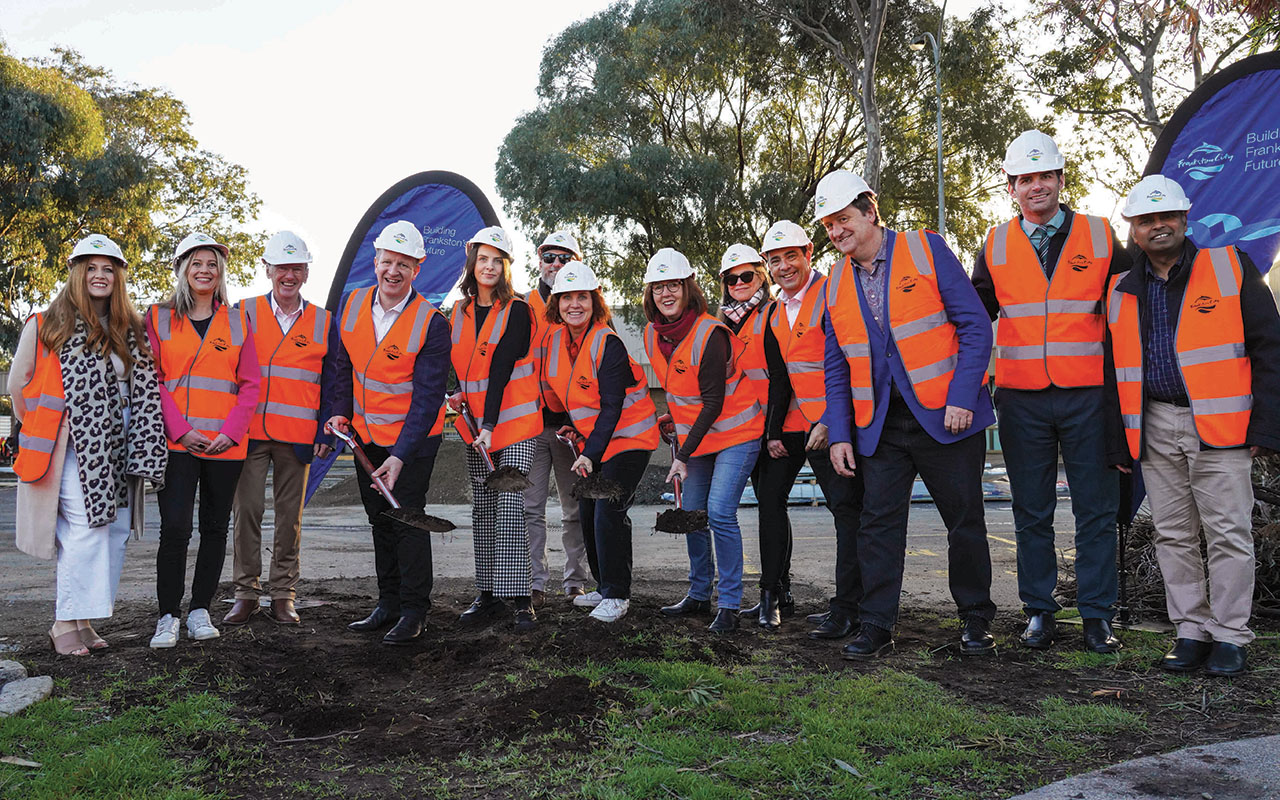
FRANKSTON councillors have approved their budget for the next financial year, signing off on a big cash splash for the Frankston Stadium project.
The 2026/2027 budget, which implements a rate rise of 2.75 percent, was passed at council’s public meeting last week. The rate rise is the maximum allowed under the state government’s rate-capping system. The amount of money that Frankston Council expects to collect from ordinary rates has risen by 4 percent.
Crs David Asker, Brad Hill, Michael O’Reilly, Cherie Wanat, Steffie Conroy, and Sue Baker voted to approve the budget, while Crs Nathan Butler and Kris Bolam opposed. Cr Emily Green abstained from the vote.
Including capital grants and contributions, Frankston Council projects a $23 million surplus for the 2026/2027 financial year. Without those financial contributions, the underlying result is a $6.9 million deficit.
The final budget approved at last week’s meeting set aside more than $83 million for infrastructure spending. $30 million of that money has been allocated to Frankston Stadium in Seaford, a $60 million project being undertaken with financial support from state and federal governments. It will feature ten basketball courts, a show court with retractable seating for up to 1000 people, two multi-purpose courts suitable for volleyball, futsal, and badminton, function spaces, a café, and a dedicated gymnastics hall. Work began on the project last year.
$2.16 million from the 2026/2027 budget will be spent on the Frankston Regional Arts Trail, $2 million on Banyan Reserve, $2 million at Peninsula Aquatic and Recreation Centre, $2.45 on Towerhill Road and nearby shared paths, $1.77 million on Monterey Reserve in Frankston North, and $1 million for Nepean Boulevard works. Council has also set aside money to expand its “Rapid Response program” to provide more patrols across the municipality.
The mayor, Cr Sue Baker, said the budget is “delivering real relief — keeping rates capped, reducing waste charges for most households, and continuing investment in the facilities, neighbourhoods and services people rely on every day.”
Cr Baker said that residential waste charges will reduce by an average of between three and four percent this year with the FOGO charge integrated into the standard waste service charge. “For ratepayers who already have a FOGO service, their waste charge will drop by around $23 with the move from a three-bin to a four-bin service,” Cr Baker said.
“These savings are possible because of careful planning and procurement, improved recycling systems, and a community that understands how to sort waste correctly.”
The mayor said that the council would continue to advocate for funds from other levels of governments for its infrastructure projects, noting that the state election is due to take place late this year.
Cr Butler planned to raise an alternate budget proposal exploring the possibility of a rate discount, but was not offered the opportunity to do so.
First published in the Frankston Times – 19 May 2026