

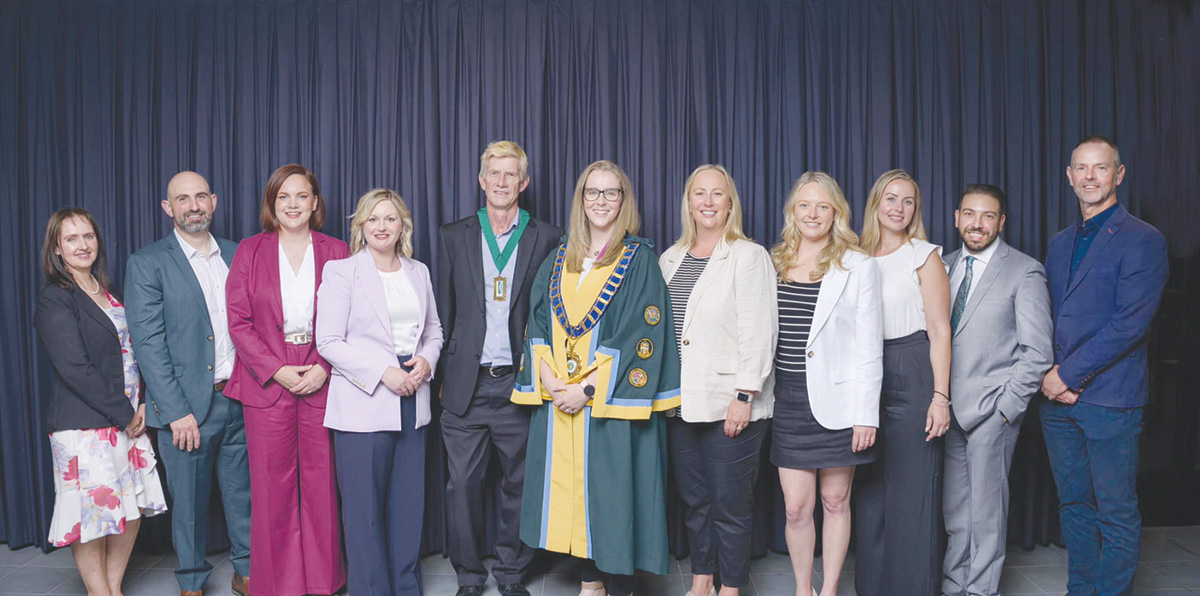
KINGSTON councillors have voted to retain their current social media guidelines, with a new proposed policy labelled as an attempt to “gag” councillors.
Kingston councillors’ use of social media has been in the spotlight this year. Two arbitration processes triggered by social media activity have been tabled so far this year, with more expected to come soon (“Arbiter called into council again”, The News 27/5/2026).
Council officers drafted a new social media policy, and recommended that the new guidelines be formally adopted at Kingston Council’s 25 May meeting. Councillors ultimately opted to reject the new policy and retain its existing framework.
Kingston councillors are currently guided by a Media and Communications Policy, which encompasses social media use. The new proposed policy noted that social media use is regulated by the Local Government Act 2020, and Kingston Council’s model councillor code of conduct.
Councillors Georgina Oxley, Caroline White, Sarah O’Donnell, Jane Agirtan, and Georgia Erevnidis voted to reject the new policy. Cr Kirrallee Ashworth-Collett voted against the alternate proposal to retain the current framework. Crs Chris Hill, Chris Howe, Hadi Saab, and Tony Athanasopoulos left the meeting before the vote took place.
Cr O’Donnell, arguing against implementing a new social media policy, said “I won’t stand by something that silences councillors, tries to gag them, and restricts our ability to do our jobs.”
“This initial policy had the chance to be weaponised,” she said. “Whilst I have to watch posts go up by the City of Kingston that I don’t necessarily endorse, I’m making posts to inform my community of what is taking place. I will continue to do that in a respectful, orderly manner.”
A report prepared by council officers read that “a stand-alone Social Media Policy is intended to enhance the policy framework and mitigate risk of inconsistent practices, uncertainty around acceptable conduct, and potential breaches of legislative, confidentiality, privacy, or conduct obligations.”
“Social media continues to be a primary communication channel for councillors and community. While it can enhance transparency and engagement, it also presents heightened risks relating to misinformation, inappropriate commentary, conflicts of interest, misuse of position, and reputational harm,” council officers wrote.
The draft social media policy ultimately rejected by councillors was presented to them at a briefing on 7 April. It read that when engaging on social media, councillors must be “acting with integrity, exercising reasonable care and diligence, and taking reasonable steps to avoid conduct that may diminish public trust and confidence in the integrity of local government.”
The rejected policy read that “councillors must not publish or engage in content on social media that misrepresents authority or role; is inappropriate, harmful or unlawful; undermines council obligations or governance; misuses information or position; expressly or impliedly seeks preferential treatment for themselves or a related person or entity; and creates conflicts of interest or bias, or creates a reasonable apprehension of bias in relation to matters that are, or are likely to come before, council for decision.”
The alternate motion approved by councillors also directed council officers to “develop guidelines for further adoption by council for use of social media that are in line with the Model Councillor Code of Conduct, Occupational Health and Safety Act 2004 (Vic) and existing policies.”
First published in the Chelsea Mordialloc Mentone News – 3 June 2026