

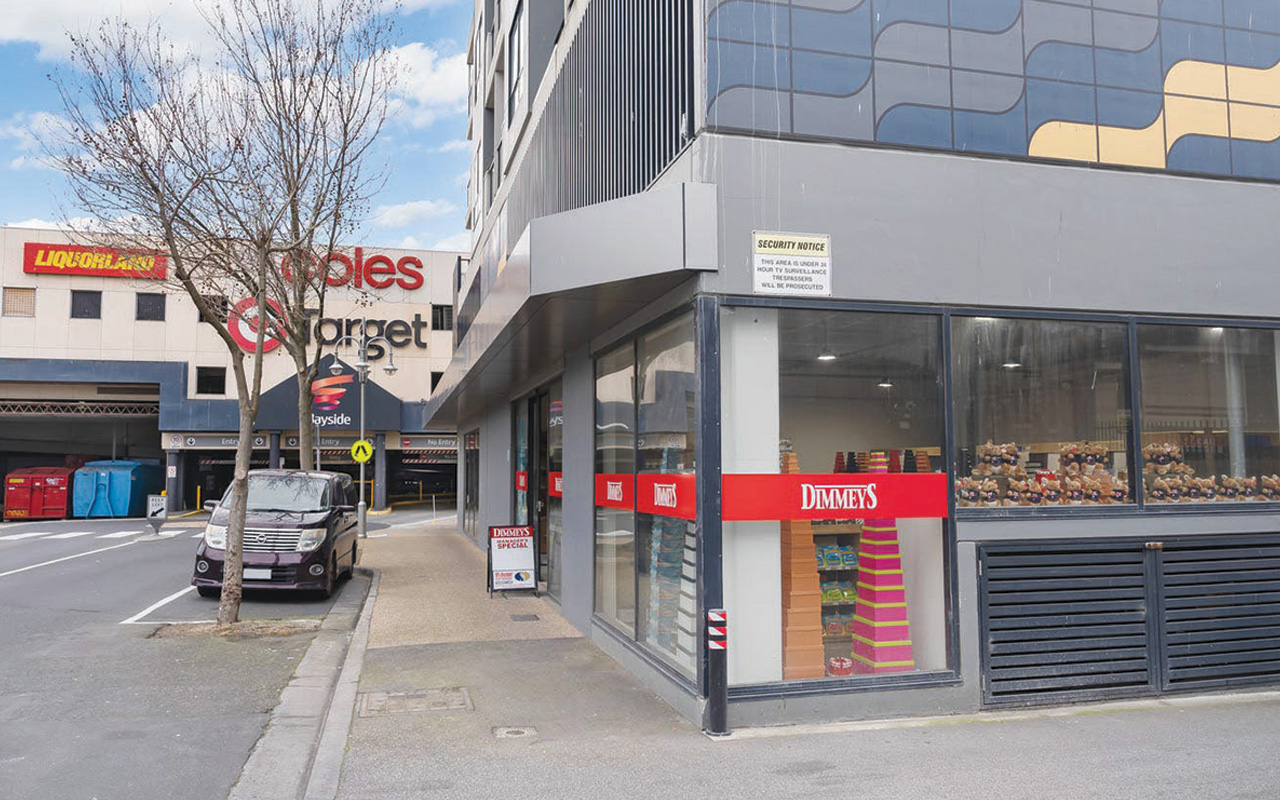
A FRANKSTON Council proposal to implement a 300 percent differential rate on untenanted commercial properties in Frankston’s CBD has been abandoned.
The proposal to set the rate at 300 percent of the general rate was raised late last year and sent out for community consultation. In response to 230 submissions, Frankston councillors rejected the proposal at their public meeting last week (“Rate hike for vacant retail spaces proposed” The Times, 16/5/2026).
Former mayor Kris Bolam spearheaded the proposal after council successfully implemented a 300 percent differential rate on empty lots in the Frankston CBD in its 2025/2026 budget. He ended up being the only councillor to vote in favour of the new differential rate, saying “I am not surprised by the internal resistance to this, but I am shocked by the reliance on such a flawed consultation, in my opinion. The report relies on a sample of 230 people, just .15 percent of our population.”
“Our current vacancy rate in Frankston City sits at a staggering 23 percent. This is not normal. Melbourne CBD is at five, Geelong at ten, and Mornington at five percent. So why are we settling for 23 percent? Why accept a reality where nearly one in four of our shop fronts is a dead space,” he said. “We’ve watched our peer cities thrive while we wait for a market correction to occur, and it won’t occur.
“Revenue from that differential funded rate [on vacant land] has actually seen reductions in both commercial and residential rates. And anecdotally, we saw a flurry of for sale signs on long-dormant lots along Nepean Highway. It worked. The proposal for a vacant shopfront differential followed this exact same philosophy, except this time for structures, not just bare earth.”
The remaining Frankston councillors in attendance at last week’s meeting voted to abandon the proposed differential rate, acting in line with a recommendation from Frankston Council officers. Cr Steffie Conroy said the plan “has caused a lot of distress on landlords who are really struggling to fill the vacancies of their shops.”
“If it was the opposite recommendation to actually proceed with the differential rate, in my humble opinion, it looks like we’re just adding another tax onto our community. I am not a fan of that,” Cr Conroy said. “We’ve already got two levels of government that does that enough, and so I’m not supportive at all for differential rates.”
Cr Michael O’Reilly said the proposed differential rate would not help fill the vacant commercial properties. “There is a substantial difference between residential property being vacant and commercial property, and the reason is that residential property is in demand,” he said. “When it comes to commercial property, it has been in decline for the last 30 years substantially. It used to be a real hot property in the old days, and ever since online shopping people buy everything online and they get it delivered to their house. You’ve also got work from home, which is becoming bigger and bigger, which means people just aren’t out in their offices and walking down the street going to businesses and cafes and so forth.
“Taxing something that’s struggling the way it is would’ve been absolutely absurd. If anything, we should be giving them a discount if they can’t find a tenant.”
The report on the proposal prepared by Frankston Council officers, recommending that council not proceed with the differential rate plan, read “the overwhelming feedback from the engagement was opposed to the introduction of a new rate for vacant commercial properties.”
“While respondents support council’s revitalisation objectives, they rejected a penalty-based mechanism and prefer a proactive approach to include incentive measures, grants, parking, safety and amenity improvements and recommended structured engagement with landlords and traders on practical solutions and attraction incentives,” council officers wrote. “Frankston City is currently undergoing a period of significant and unprecedented change, particularly within the CBD. With multiple major developments and high-rise projects recently completed or nearing completion, it is important that we allow the market time to stabilise and respond organically. Based on the feedback, it is not recommended to proceed with the proposal for a differential rate on vacant commercial properties.”
The consultation asked participants “Do you support council’s proposed introduction of a differential rate for all vacant commercial properties in the Frankston city centre (FMAC) at 300 per cent of the general rate?” In total 127 respondents opposed the proposal, and 85 supported it. A breakdown of the respondents found that of the 137 Frankston municipality residents who responded, 48.9 percent opposed the proposal and 51 percent supported it. 53 of the respondents were owners of a commercial property in the Frankston city centre, with 86.79 percent of those respondents opposing the proposal. Council officers wrote that “Notably, there was a much higher number of participants who live outside of FCC than we usually get for engagements.”
During his speech to council in support of the proposal, Cr Bolam noted that a prominent real estate agent campaigned against the proposal. While community consultation was being undertaken, Nichols Crowder director Michael Crowder wrote to Frankston Council stating that the economic revitalisation of Frankston’s city centre “cannot be accelerated through punitive financial measures, particularly ones that those least able to afford it would bear.”
“Every commercial property owner currently experiencing vacancy is already under significant financial strain. Vacancies are not the result of neglect or disinterest, but of prolonged structural and economic challenges within the Frankston Activity Centre,” Crowder said. (“Submissions open on vacant shop rates” The Times, 24/2/2026)
First published in the Frankston Times – 28 April 2026